




Fire, Art, and Empathy: The Making of One of New York’s Bravest
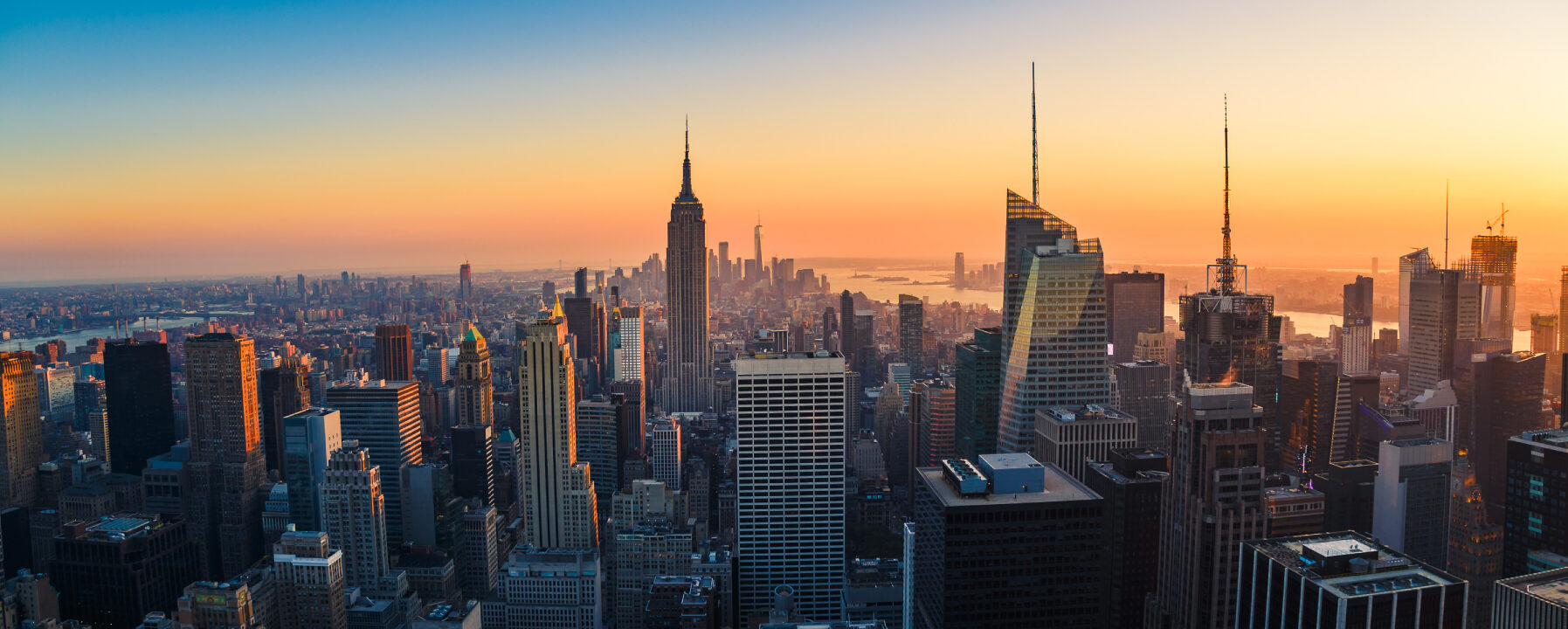
I live in NYC – the clanging and siren of the red fire truck is ubiquitous, it’s the citys hearbeat. Firefighters are the city’s silent guardians – responding to blazes, medical emergencies and disasters with speed and precision. Beyond fighting fires, they rescue trapped citizens, provide first aid, and ensure safety through inspections and education Their courage and readiness form the nucleus of urban resilience , protecting lives amid chaos and danger. But what is the day in the life of a firefighter like ? What is a real life firefighter like? Then by a serendipitous happenstance I met Furhan Ahmad – a rare South Asian in this all American brotherhood. Furhan is tall, well-built, young, charming with a trusting and wise face, and a calm and commanding demeanor that immediately fills you with ease . All the attributes we naturally assign to those on whom our lives depend. We met at the Belle Epoque Lafayette brasserie to reminisce about his life as a firefighter. Furhan was born and raised in NYC, always tethered to the pulse of the city. He became an EMT right out of high school to then become a police officer and finally a firefighter.
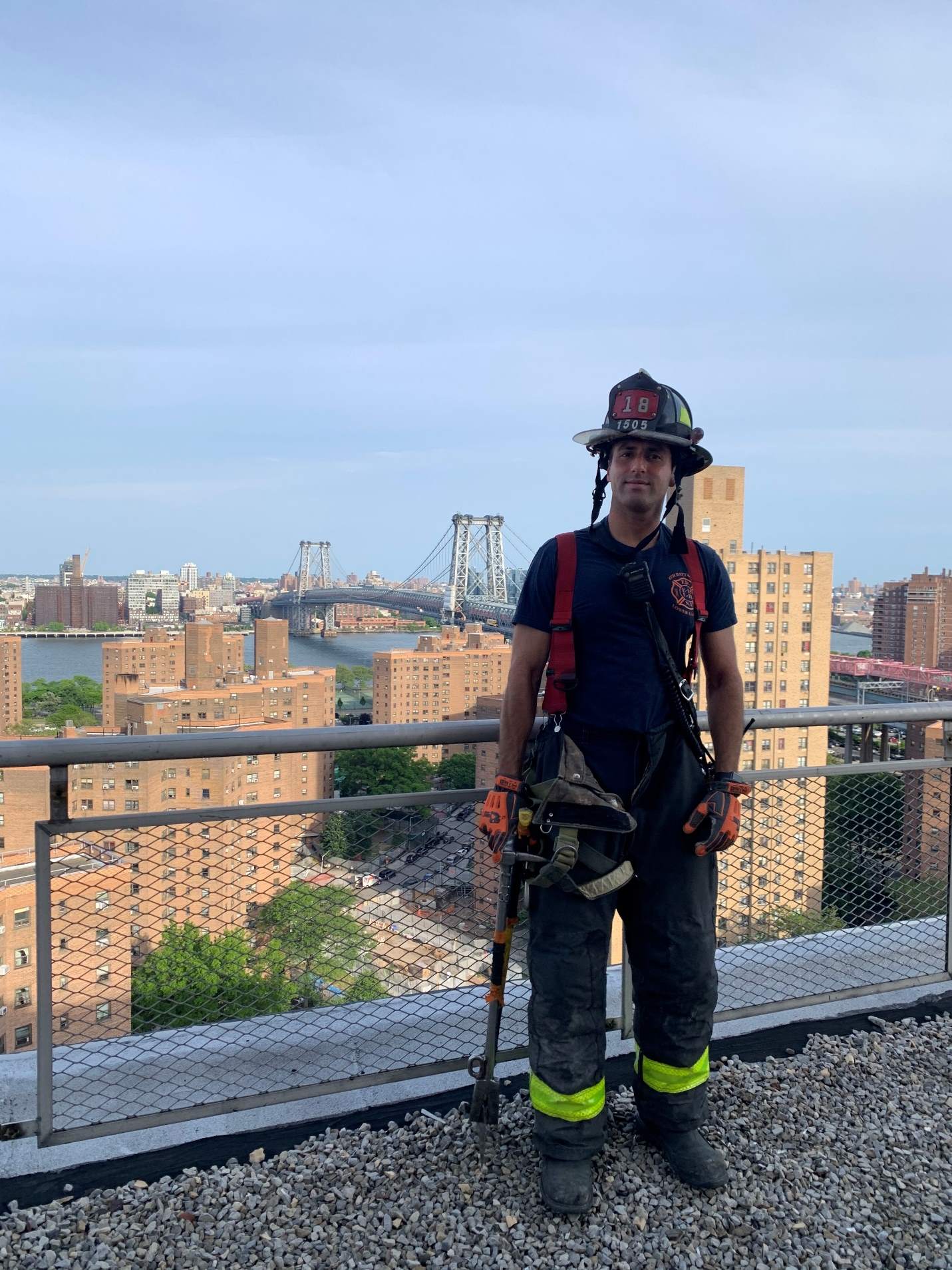
Why I asked Furhan ? It was all about caring, compassion and giving back. As a child, he had seen firsthand the grotesquerie of the city and the lack of support felt by many. And fortuitously in 2005, he got inducted into the FDNY where he could act out his dreams.
Over Stumptown coffee I asked how does the siren alarm affect you when you first heard it and even today? It pierces the stillness of everything around you. It’s not the kind of sound you can get used to, even after years on the job; it slices through conversation, through dreams, through breakfast, and reminds everyone of why you are here.
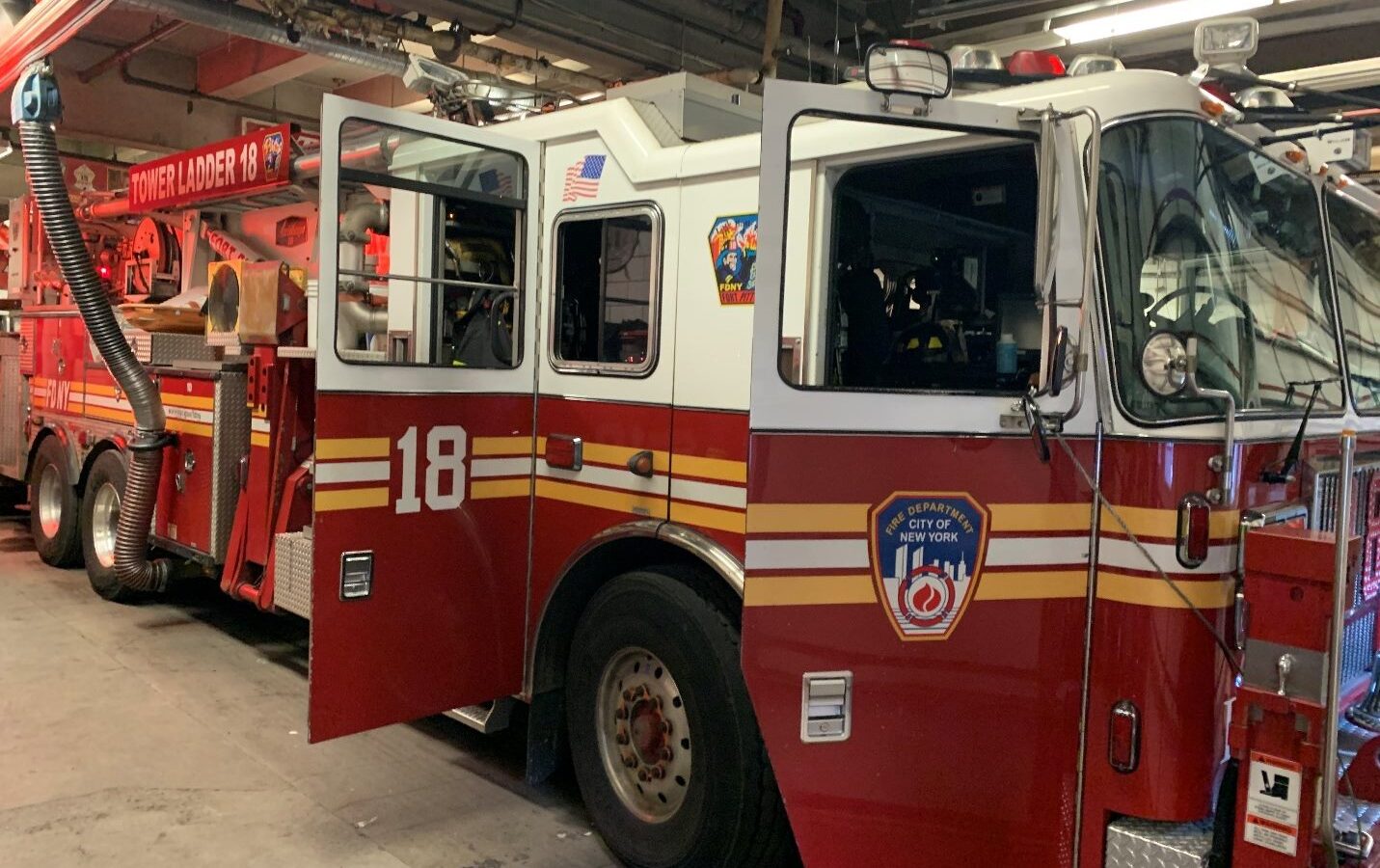
The friendly staff brough us their famous supreme pistachio croissants . A typical day ? By mid-morning, training begins. At his Ladder Company in the Lower East Side , the crew drills in the firehouse, practicing hose stretches or climbing into smoky mazes designed to simulate burning buildings. The city’s verticality demands constant practice; hauling tools up 20 flights of stairs with little visibility is not something left to instinct. Even veterans train daily, because the city, and its emergencies, never repeat themselves. Preparation is survival because at any moment the bell may toll for thee. Then the calls come. But is every call a fire? Often it’s medical runs: a heart attack in a fifth-floor walk-up, a construction accident, a child choking. FDNY firefighters are trained as first responders, arriving minutes before paramedics in many cases.
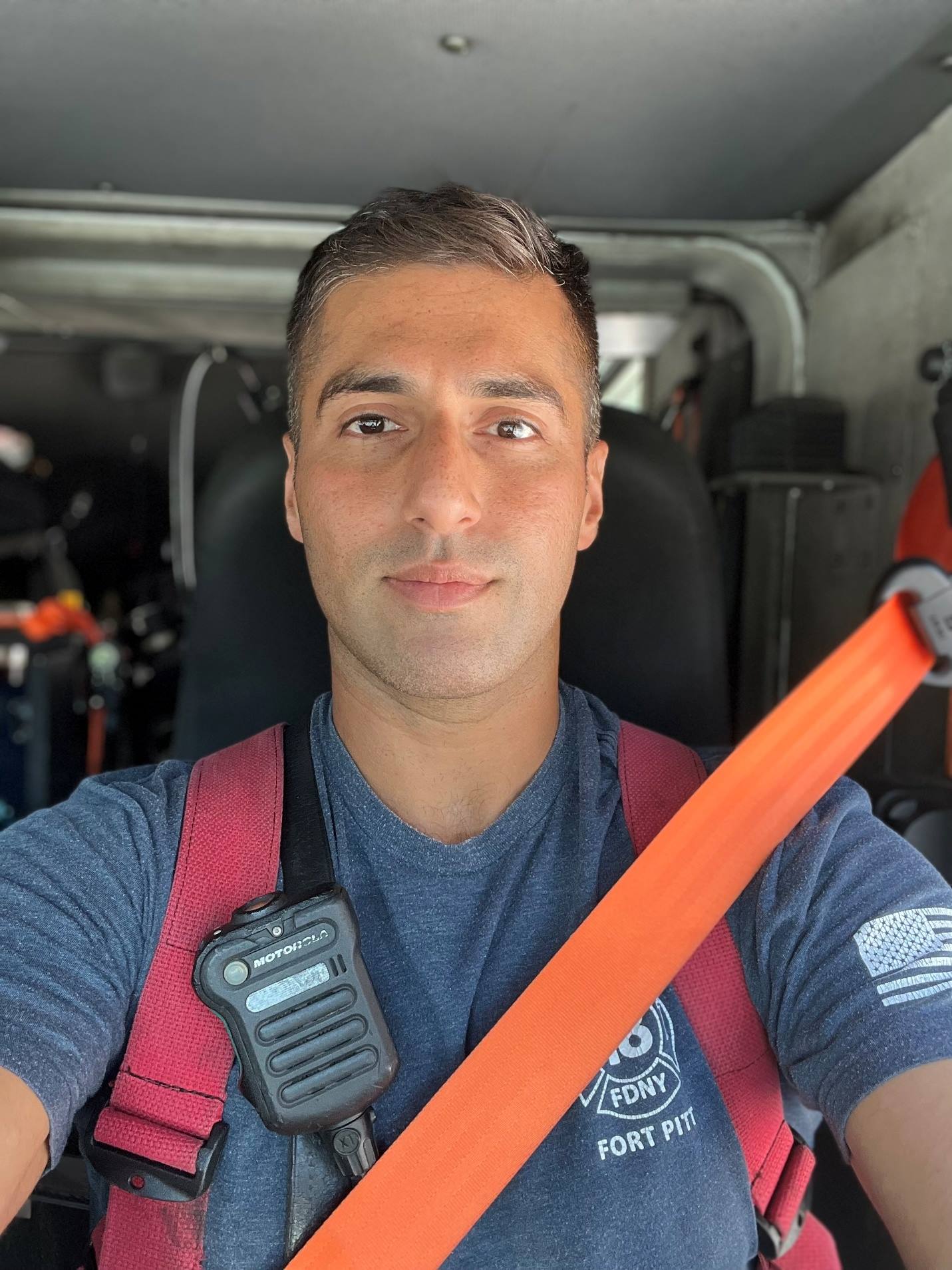
Furhan describes a real-life fire situation. When fire does break out, the chaos is immediate and unforgiving. Inside, the heat is suffocating, visibility reduced to near zero. The crackle of flames mixes with the thud of boots and the hiss of water. Firefighters move in pairs, depending on one another as though tethered by invisible rope. They search for trapped residents, their breathing punctuated by the rasp of air tanks. Every second is calculation and instinct, sharpened by training but ruled by urgency.
But what Furhan remembers most is not the clanging and siren calls of the fire engines. That is the visible, romantic folk lore which we all hear and know. What he remembers most is the woman in the public housing destitute and hungry, the child who goes without medical treatment, the emptiness of lives destroyed and the futility and hopelessness that he saw on a daily basis. Furhan’s eyes tear up with thoughts of those indelible and powerful images and the helplessness’ that he felt in the face of these experiences. Would you relive this again? Would you encourage the young to dream the way you did? A resounding Yes. All of us should be grateful for where we are because by a roll of the dice, our roles could have been reversed.
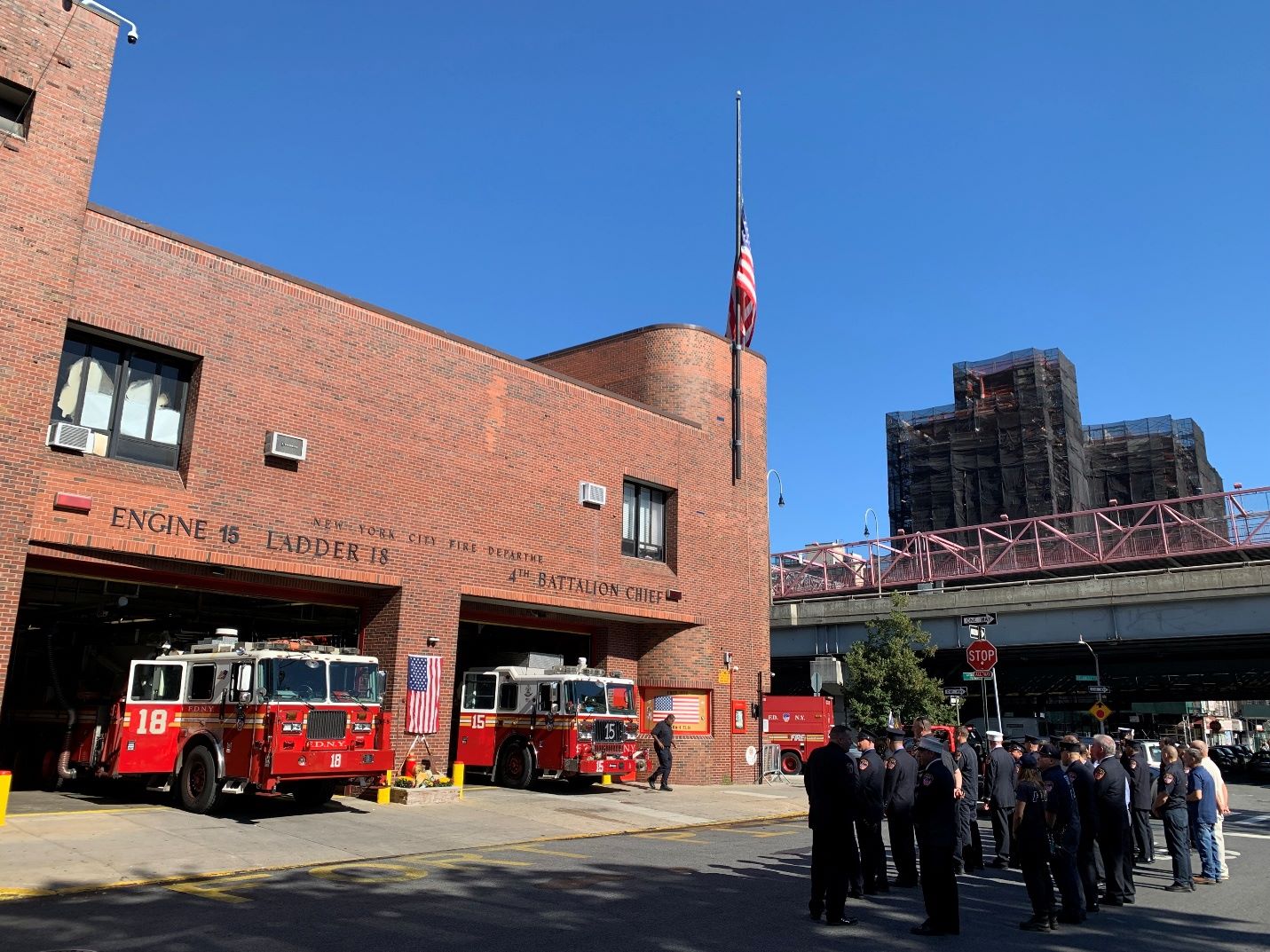
Future plans I mused ? Commitment to public service as an elected official or with an agency supporting New Yorkers in need . A natural progression from his years as first responder. But Art is also his grounding force and inspiration. Studying under the legendary Roy DeCarava he discovered the quiet power of images to move people. For Furhan, both service and art stem from the same place – empathy and purpose . I thought Furhan could well use his twin passions for the greater good of New Yorkers . But what truly warms the heart is Furhan’s engagement to Anjula Acharia – the elegant, glittering sophisticate who is shaping the global narrative – one South Asian story at a time. From the clank of the sirens in the city to the siren call of a warm and loving relationship, Furhan marches onward towards a destiny filled with art, compassion, love and glamor. With quiet confidence and grace one of New York’s Bravest has renewed himself.
Published in the American Bazaar